

The last race is over. Your goggles are still in the bag. Saturday arrives, and for the first time in months, there is no long ride you have to finish before the rest of your life can begin.
That freedom can feel suspicious. After a season spent building fitness, doing less takes some practice.
Good triathlon off-season training starts with recovery, then settles into a smaller, repeatable routine. You can let peak race fitness fade without abandoning the habits that built it.
The short version: Recover first. Shorten the week. Keep most training easy. Give one weakness some attention. Leave enough room in the schedule to want to train again.
First, decide which part of the off-season you are in
The week after your final race and an ordinary week two months later have different jobs. Treating them as the same training phase is how a needed break turns into another demanding block.
| Phase | What the week is for |
|---|---|
| Recover | Rest, sleep and optional gentle movement while race fatigue settles. |
| Maintain | A manageable swim, bike and run routine, plus strength practice. |
| Rebuild | Gradually add the endurance and race-specific work your next goal requires. |
There is no universal date when you must move from one row to the next. A hard long-course race, a stressful season and an uncomplicated sprint finish can leave very different recovery needs.
For the first phase, take structured workouts off the calendar. Walk, swim gently or spin if it feels good; take complete rest when that feels better. Before rebuilding a routine, look for ordinary daily energy, settling soreness and easy exercise that feels easy again.
Persistent exhaustion, falling performance or pain that changes how you move deserves assessment, rather than another test of discipline. Those symptoms have several possible causes; a watch cannot diagnose overtraining. The ECSS/ACSM consensus explains that distinction.
How much fitness can you keep while training less?
Quite a bit, under the right conditions. But the smallest effective dose is less settled than a tidy weekly-hours target suggests.
A 2021 review of reduced training found that, in general populations, endurance performance could be maintained for up to 15 weeks when training frequency fell to two sessions a week, or when volume fell by 33–66%, as long as exercise intensity was maintained.
Those were different ways of reducing training, not instructions to combine every cut. The authors also found insufficient evidence to prescribe minimum doses specifically for athletes. Two workouts a week is not an established formula for preserving a triathlete's swim, bike and run performance.
The useful lesson is more modest: you have room to reduce the workload. A review of 41 detraining studies also distinguishes reduced training from stopping altogether. What you retain depends on your training history, the length of the break and what you continue doing.
Once recovered, a practical place to start is shortening the long sessions that dominated race preparation. Keep a few familiar appointments in the week. Judge the result by how manageable it feels, rather than whether a training-load chart keeps climbing.
Keep a purpose for each sport
These example sessions suit healthy triathletes who have recovered from their season. Adjust them to your experience and usual workload.
Swim: make one change you can feel
Use a shorter swim to work on something specific: breathing without lifting your head, holding a comfortable body position, or keeping the stroke controlled when you tire. Feedback from a qualified swim coach can help identify which change is worth your attention.
Try 25–35 minutes with an easy warm-up, then short repeats alternating one chosen drill with normal swimming. Rest enough to keep the movement deliberate. Finish with relaxed continuous swimming and notice whether the change carries over.
If getting to the pool is the difficult part, book the slot before filling the week with easier-to-arrange rides and runs. A swim you can repeat is more useful than an ambitious session that stays on the calendar.
Bike: keep a little pressure on the pedals
Indoor riding makes a short session easy to contain. Most can be conversational. When you are recovered and comfortable with intervals, one ride can include a few controlled efforts.
For example: within a 40–50-minute ride, warm up, ride four 2-minute efforts at a strong but repeatable effort, and pedal easily for 2 minutes between them. Finish easy. You should be able to repeat the final effort without a sprint or a collapse in form. On a tired day, keep the whole ride easy.
In a small randomized study of 16 triathletes, four weeks of reduced-volume training with two high-intensity sessions per week improved maximal oxygen uptake and cycling power at ventilatory thresholds. In that group, simulated cycling and running performance stayed unchanged. Better lab numbers did not translate into a better performance test.
Run: keep the routine comfortable
It is tempting to spend every hour freed up by cycling on running. Be careful about making a lighter overall week into a sudden increase in the sport that loads your legs differently.
Keep familiar, easy runs at durations you already handle. Two short runs you finish comfortably can be a sensible starting arrangement for the sample week below. They are not a universal minimum, and an athlete accustomed to more frequent running may prefer to preserve frequency and shorten each outing.
If strides are already part of your routine, an occasional easy run can end with four relaxed accelerations of 15–20 seconds, with walking or easy jogging until fully recovered. Stay smooth and stop short of an all-out sprint. Strides are optional; do not add them alongside unfamiliar lifting and a jump in running volume.
Give strength training a regular place
During race preparation, lifting often gets whatever time is left. The off-season is an opportunity to give it a predictable slot.
In a 26-week randomized study involving 25 long-distance triathletes, adding progressive strength work improved cycling economy in the earlier training block and running economy in the later block. Economy means the energy cost of producing a given workload. The study measured exercise economy, not race finishes or injury rates.
For a simple starting session, choose familiar versions of these movements:
- A squat or step-up.
- A hip hinge, such as a light Romanian deadlift.
- A calf raise.
- A row and a push-up or press.
- A carry or a short trunk-control exercise.
Start with loads and sets you can control, leaving a few repetitions in reserve. New lifters can use the first sessions to learn the movements with qualified guidance. Experienced lifters can progress from their existing program. Two short sessions fit the example week below.
If lifting leaves you too sore to run normally, reduce it. Finishing a strength workout should not cost you the next several days of training.
A sample off-season week: 5 hours 30 minutes
This example suits a recovered age-grouper already comfortable training more than this. It includes two swims, two rides, two runs, two short strength sessions and one full rest day. If it would increase your current workload, shorten or remove sessions.
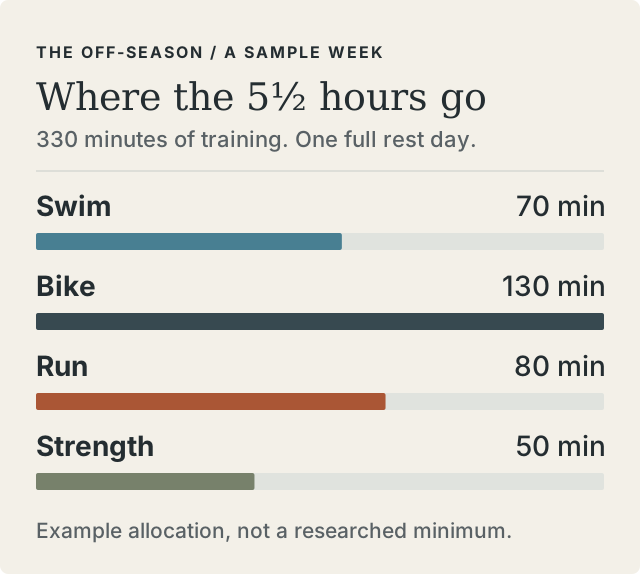
Minutes in the example week below, including strength work.
| Day | Session | Time |
|---|---|---|
| Monday | Rest | — |
| Tuesday | Swim 35 min + strength 25 min | 60 min |
| Wednesday | Bike; optional controlled efforts | 50 min |
| Thursday | Easy run 35 min + strength 25 min | 60 min |
| Friday | Swim with one technique focus | 35 min |
| Saturday | Comfortable, conversational ride | 80 min |
| Sunday | Easy run | 45 min |
| Total | 330 min |
All warm-ups, recoveries and cool-downs fit inside the listed times. Keep the swims and runs comfortable; Wednesday is the only planned opportunity for sustained harder work, and it remains optional. If Tuesday's lifting leaves your legs heavy, skip those efforts.
When the week gets crowded: shorten the longer ride first, or trim individual sessions. If you can only reach the pool once, work with that constraint. Do not squeeze missed workouts into Sunday or treat this schedule as a checklist you owe someone.
When you have more time: you do not have to spend it training. If you want an extra session, make it an easy outing or replace a session with a sport you enjoy. A hike still counts as a demand on your legs; cross-training is not automatically recovery.
Use the spare capacity on one thing
Choose a problem small enough to work on for several weeks. “Get better at triathlon” is too vague. “Breathe to the left without lifting my head” gives the next swim a job.
Other useful projects include learning a comfortable lifting technique, practicing bike handling somewhere safe, or finding a weekday run slot that survives work and family commitments.
Keep a simple note: what you practiced, what changed and what still feels awkward. You do not need a fresh threshold test every week to show that the off-season is working.
Let sleep and meals support the lighter schedule
An early session you remove is an opportunity to sleep longer, especially if the season has meant months of shortened nights. The athlete sleep consensus favors attention to individual sleep needs and circumstances over a single target for everyone. Start by protecting a regular opportunity to sleep.
Food needs can change with training volume, but a lighter calendar is not a reason to turn recovery into aggressive dieting. Keep regular meals, fuel the sessions you do, and include carbohydrate and protein as part of recovery. The IOC's consensus on relative energy deficiency in sport describes health and performance risks when low energy availability becomes problematic in both women and men.
Persistent fatigue, recurrent injuries or menstrual changes warrant professional advice. Cutting more food or adding more training is not a useful default response.
How to know when to build again
Before adding race preparation, ask whether you can repeat your current week comfortably. Look for normal daily energy, manageable soreness, easy sessions that feel appropriate and an appetite for more training.
Then change one substantial demand at a time. You might lengthen the weekend ride while leaving running and lifting steady. Later, add the work specific to your next race. A long-course athlete will eventually need longer sessions; a pleasant maintenance week does not replace them.
Put the next race and your actual available days into the plan. Transition can adapt training around your schedule and goals, including the weeks when work or family takes priority.
You should reach the next training block rested, still comfortable in all three sports, and ready to make room for longer sessions again.
Off-season questions
Should triathletes stop training completely?
A complete break can be appropriate after a demanding race or season. There is no single duration that fits everyone. Once you feel recovered, a manageable routine can help retain fitness and skills through the remaining off-season. Injury or persistent fatigue may call for a different plan.
Is winter training the same as off-season training?
No. The off-season follows your race calendar. Winter might be your main preparation period if you have an early race. Decide what phase you need first, then adapt its sessions to daylight, weather and indoor facilities.
Do I need bricks in the off-season?
They do not need to be a weekly obligation during a general maintenance period. Separate rides and runs may fit life and recovery better. Bring more bike-to-run practice back as race-specific preparation becomes the priority.
Can I maintain triathlon fitness on three hours a week?
Three hours can keep you active and preserve some training stimulus, but research does not establish it as enough to maintain all triathlon performance. Use the time you have, keep expectations realistic, and plan a gradual return to race preparation later.
Alex Wormuth is the founder of Transition. This guide draws on the linked research; the example sessions and weekly schedule are practical applications, not an individually prescribed training plan. Hero illustration created with AI. Research checked October 11, 2026.


